3 Helpful Dyslexia and literacy organizations
Dyslexia is a specific learning disability that is neurobiological in origin. Although more and more states are passing laws regarding dyslexia screening and intervention, it is still a learning disability that is widely misunderstood and mischaracterized across our country. The more we know, the better we can help and support students, families, and our communities.
This post features three websites that are bookmark-worthy! These literacy websites serve as reliable and helpful sources of information about dyslexia, as well as a community for educators, parents, research, and resources.
The International Dyslexia Association (IDA)

The IDA, or the International Dyslexia Association, is a nonprofit organization that advocates for issues surrounding dyslexia and other reading difficulties. Their website offers a treasure trove of helpful information! What I love most about this site is how it breaks down complex research into practical, classroom-ready strategies. This is also a website you can refer to when searching for accredited dyslexia programs, or information on how to become CERI certified for dyslexia. Whether you’re looking for quick facts to share during parent-teacher conferences, infographics and the latest research news, or details about upcoming and accredited educational programs and conferences, the IDA website has you covered!
The Reading League

As a proud member of The Reading League‘s Ohio Chapter, I’ve found their mission and online resources to be absolutely incredible! The Reading League is on an amazing journey to make sure EVERY student has access to reading instruction that is founded in the science of reading. In other words- reading instruction that actually works!
What makes The Reading League so special is its commitment to both the science of reading AND equity in education. The Reading League understands that teaching reading correctly requires us to make sure every single student, especially those from historically underserved communities, get the opportunity to become strong readers. Every child counts.
The Reading League explains that they serve as a “knowledge broker”. The organization takes complex reading research and turns it into practical strategies that educators can actually use in the classroom. They offer frequent professional development through virtual and in-person conferences and webinars that you can learn about on their website. In addition to their online presence, The Reading League also has a printed journal that is filled with the latest literacy news and topics.
Most recently, The Reading League launched a children’s literacy show called The Reading Buddies. You’ll find 60 episodes on YouTube for your students and children to watch! Whether you’re looking for new teaching techniques, wanting to understand the science behind how kids learn to read, or seeking ways to make your reading instruction more inclusive, The Reading League is a valuable resource for you.
Understood.org

Understood.org is another nonprofit organization that provides an incredible wealth of knowledge, resources, and information for parents and teachers! This organization was born from a parent’s journey to support their child with learning differences, and it has grown into something truly amazing.
What makes Understood.org so special is how it grew from real family experiences. The founders went through exactly what many of our students’ families are experiencing- that overwhelming moment of realizing your child learns differently, and the challenge of finding the right support for them and information for you. The founders took that learning experience and created an online community where everyone can access the resources, expertise, and community they need to thrive. The website contains information on a multitude of learning disabilities, but they have dedicated space for the areas of dyslexia, ADHD, dyscalculia, language disorders, and written expression disorders.
The website features videos that help explain learning differences clearly, and includes downloadable guides that make perfect handouts for families during meetings and parent-teacher conferences. I also absolutely love the misconception fact sheets for various topics, too. You’ll find everything from resources for IEPs, information on understanding 504 plans, a free behavior tracker for parents, and more!
The best part? Their resources aren’t just about supporting students with learning differences – they’re about helping everyone around them thrive and be understood. When we better understand and support our students with dyslexia and other learning differences, we create a stronger, more inclusive literacy community for everyone.
MakE These Resources Work for You
Sharing resources like these with parents and colleagues in your own school can be helpful. There are a few different places and times you can share information with those in your own community.
- Parent-teacher conferences is a great time to share. I love having quick fact sheets ready to go. It helps families feel more informed and supported in understanding their child’s learning journey.
- Team meetings, PLCs, and grade-level meetings– These sites offer amazing presentation materials that make professional development so much more engaging and practical.
- Literacy and family newsletters– These website include a wealth of parent and family PDFs, infographics, and information that you can easily share and link within your family newsletters for your school community.
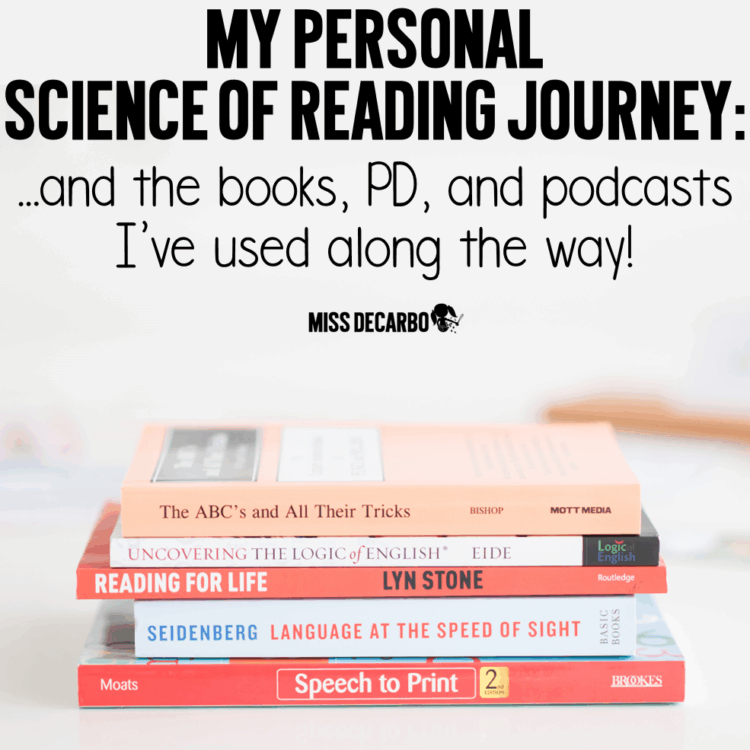
If you’re looking for resources, books, and podcasts that can guide and help you on your journey into the science of reading, check out my blog post of 20 Favorite Science of Reading Resources and Books, or click the picture below:
Keep spreading the literacy science and excitement in your classrooms and schools! I hope these resources help to provide parents, colleagues, and other members of your community with some helpful information on dyslexia and other language-based learning disabilities.
Don’t forget to bookmark the resources above, and this blog post, so that you can come back to them again and again.